
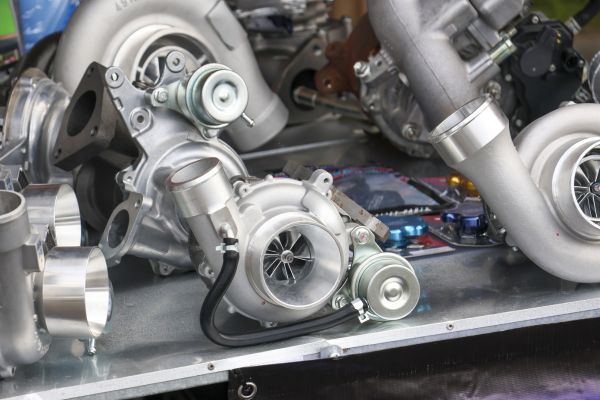
Turbocharging has become one of the most popular ways to increase engine performance. The idea sounds simple enough: push more air into the engine, add the right amount of fuel, and make more power. In reality, though, upgrading a turbocharger involves much more than choosing the largest unit that fits under the hood.
For someone new to performance modifications, turbo terminology can feel overwhelming. Compressor wheels, boost pressure, wastegates, intercoolers, tuning, and turbo lag all enter the conversation at once. That can make a straightforward upgrade seem far more complicated than it needs to be.
The best approach is to slow down and understand how the complete system works. Turbocharger upgrades for beginners should focus on balance, reliability, and realistic performance goals rather than chasing the biggest possible horsepower figure.
Understanding What a Turbocharger Actually Does
A turbocharger uses exhaust gases to spin a turbine. That turbine is connected to a compressor wheel, which pulls in outside air, compresses it, and sends it toward the engine.
Because compressed air contains more oxygen, the engine can burn additional fuel during each combustion cycle. The result is more power from the same engine displacement.
Boost pressure is commonly measured in pounds per square inch, or PSI. Increasing boost can raise power, but pressure alone does not tell the whole story. Air temperature, turbo efficiency, fuel quality, ignition timing, and engine condition are equally important.
A smaller turbo may produce boost quickly and make the car feel responsive around town. A larger turbo can move more air and support higher horsepower, but it may take longer to build boost. That delay is often called turbo lag.
Neither design is automatically better. The right choice depends on how the vehicle will actually be driven.
Start with a Clear Performance Goal
Before buying any parts, decide what you want the car to do better.
A daily-driven hatchback needs a different turbo setup than a drag racing project. Someone looking for stronger midrange acceleration may be perfectly happy with a modest turbo upgrade. Another driver building a weekend track car might accept slower spool in exchange for greater high-rpm power.
It helps to choose a realistic horsepower range rather than saying you simply want “more power.” A defined target makes it easier to select the turbo, fuel system, intercooler, exhaust components, and engine management strategy.
This also keeps the project under control financially. Turbo builds have a habit of expanding. A new turbo may require larger injectors, a stronger clutch, improved cooling, new sensors, and professional tuning. Planning around a specific goal reduces unnecessary spending and prevents mismatched parts.
Check the Engine’s Health First
An engine should be healthy before it is asked to handle additional boost.
A compression test can reveal worn piston rings, damaged cylinders, or sealing problems. A leak-down test offers an even closer look at the condition of the combustion chambers. Oil pressure, coolant condition, spark plugs, ignition coils, hoses, and vacuum lines should also be inspected.
Small problems often become much more noticeable once boost increases. A weak ignition coil may cause misfires under load. A cracked vacuum hose may create unstable boost control. An aging cooling system may struggle with the additional heat.
Maintenance is not the exciting part of a turbo upgrade, but it is one of the most important. Fresh fluids, good-quality filters, healthy sensors, and properly functioning ignition components provide a stronger foundation for everything that comes next.
Choosing the Right Turbo Size
Turbo sizing is where many beginners make their first major mistake.
A very large turbo may look impressive on a parts list, but it can make a street car frustrating to drive. If the turbo does not produce meaningful boost until high engine speeds, normal acceleration may feel weak and disconnected.
A smaller turbo generally spools earlier, which means boost arrives sooner. This creates strong low- and midrange torque, making the car feel lively during ordinary driving. The trade-off is that a small turbo may run out of airflow at higher power levels.
A larger unit can support more peak horsepower because it moves a greater volume of air efficiently. However, the engine must produce enough exhaust energy to spin it. On a smaller engine, that may not happen until later in the rev range.
For most first-time builds, a responsive turbo that comfortably supports the intended power goal is usually a better choice than an oversized setup with unused capacity.
Supporting Modifications Matter Just as Much
A turbocharger does not operate alone. It depends on several supporting systems to deliver power safely and consistently.
The intercooler cools the compressed air before it reaches the engine. Compression creates heat, and hotter air is less dense and more prone to detonation. A larger or more efficient intercooler can help reduce intake temperatures, especially during repeated acceleration.
The fuel system must also keep up. Depending on the vehicle and target power, upgrades may include higher-flow fuel injectors, a stronger fuel pump, or changes to fuel pressure control. If the engine receives more air without enough fuel, it can run dangerously lean.
Airflow restrictions matter as well. An improved intake path and less restrictive exhaust can help the turbo operate more efficiently. That does not mean every car needs the loudest exhaust or largest pipe available. Pipe diameter should match the engine, turbo size, and power target.
Even the clutch or automatic transmission may need attention. More torque places additional stress on drivetrain components that may have been designed for factory output.
Why Proper ECU Tuning Is Essential
Installing a larger turbo without proper tuning is one of the fastest ways to damage an engine.
The engine control unit manages fuel delivery, ignition timing, boost targets, throttle response, and many safety functions. A new turbo changes how much air enters the engine and how quickly that airflow develops. The factory calibration may no longer be suitable.
A proper tune adjusts the engine’s behavior to match the new hardware. It can control boost more accurately, maintain safe air-fuel ratios, and reduce the risk of knock.
Custom dyno tuning is often the most precise option because the calibration is created around the specific vehicle. Reputable off-the-shelf tunes can work well for common combinations, but they usually require exact matching parts and good fuel quality.
Data logging is equally valuable. It allows the tuner to monitor boost pressure, ignition correction, fuel trims, intake temperature, and other operating conditions. A car may feel fast from the driver’s seat while still showing warning signs in the data.
Learning About Boost Control
Boost must be controlled rather than allowed to rise without limits.
The wastegate regulates how much exhaust gas passes through the turbine. When the desired boost level is reached, the wastegate opens and redirects part of the exhaust flow away from the turbine wheel.
An internal wastegate is built into the turbo housing and is common on factory-style setups. An external wastegate is mounted separately and can provide more precise control on higher-flow builds.
A boost controller influences when and how the wastegate opens. Electronic controllers can offer detailed control through the ECU, while manual controllers use a simpler mechanical design.
Beginners should avoid increasing boost without monitoring the results. A small pressure increase can create a significant jump in cylinder pressure, heat, and fuel demand. Safe boost depends on the turbo, engine internals, fuel system, tune, and operating conditions.
Managing Heat and Lubrication
Turbochargers operate under intense heat and rotate at extremely high speeds. Clean oil and proper cooling are essential to their survival.
Oil lubricates the turbo bearings and carries heat away from the center housing. Poor oil quality, low oil pressure, restricted oil lines, or incorrect drain routing can quickly damage the turbo.
Some turbochargers are also water-cooled. Coolant continues absorbing heat from the center section after the engine is shut down, helping reduce oil coking and long-term wear.
After hard driving, it can be sensible to let the engine run briefly before switching it off. This gives temperatures time to settle and allows oil and coolant to continue circulating. Modern water-cooled factory systems are generally more tolerant than older designs, but repeated hot shutdowns are still not ideal.
Heat shielding around the exhaust manifold, turbine housing, wiring, and nearby hoses can also prevent melted components and excessive under-hood temperatures.
What to Expect After the Upgrade
A well-planned turbo upgrade changes more than the peak horsepower number.
Throttle response may feel different. The engine might pull harder in the midrange or continue making power higher in the rev range. Exhaust sound, intake noise, and turbo whistle may become more noticeable.
Fuel consumption can also change. During relaxed cruising, the difference may be small. Under boost, however, the engine requires more fuel because it is producing more power.
Maintenance habits may need to become stricter. Oil changes, spark plug inspections, hose checks, and data logs become more important on a modified vehicle. Unusual noises, smoke, hesitation, or sudden changes in boost should never be ignored.
The first few drives should be treated as a testing period. Watch fluid levels, check for leaks, monitor temperatures, and confirm that boost behaves consistently.
Common Beginner Mistakes to Avoid
The most common mistake is focusing entirely on the turbo while ignoring the rest of the vehicle.
Another is selecting parts based only on advertised horsepower ratings. A turbo capable of supporting 600 horsepower is not necessarily ideal for a car targeting 300 horsepower. Operating range and response matter just as much as maximum capacity.
Poor-quality installation can also create serious problems. Loose clamps, leaking charge pipes, poorly routed oil drains, and inadequate heat protection may cause failures even when the parts themselves are good.
Finally, beginners sometimes treat tuning as an optional final step. It is not. The tune connects every part of the system and determines how safely the engine uses its new airflow.
Building Power the Sensible Way
Turbocharger upgrades for beginners do not need to be intimidating. The process becomes much easier when it is approached as a complete system rather than a single-part replacement.
Start with a healthy engine, set a realistic power target, and choose a turbo that fits the vehicle’s intended use. Give equal attention to fueling, cooling, airflow, boost control, drivetrain strength, and ECU calibration.
The most enjoyable turbo build is not always the one with the largest power figure. It is the one that starts reliably, responds predictably, manages heat properly, and delivers usable performance whenever the driver presses the accelerator. Thoughtful planning may not sound dramatic, but it is what turns a collection of performance parts into a genuinely satisfying car.