
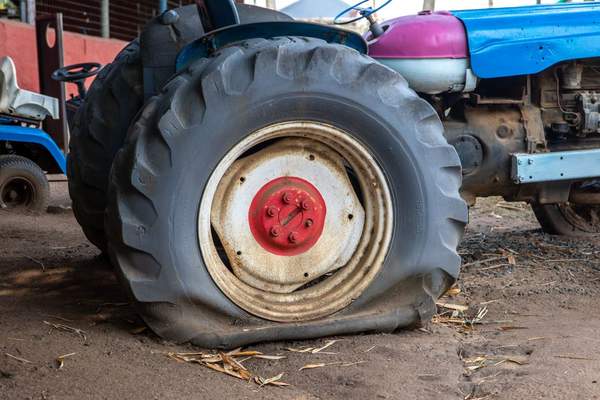
A puncture on a busy motorway can turn an ordinary journey into a stressful roadside stop. Run-flat tyres promise a useful alternative: enough mobility to reach somewhere safer without immediately changing a wheel. Yet the convenience comes with compromises in comfort, replacement options and cost. Understanding run flat tyres pros and cons is less about finding a universally superior tyre and more about deciding which trade-offs suit your car and journeys.
What makes a run-flat tyre different?
Most run-flat tyres sold for passenger cars are self supporting tyres. Their reinforced sidewalls can temporarily carry the vehicle’s weight when inflation pressure is lost. An ordinary tyre, by contrast, can quickly become unsafe to drive on when substantially deflated. Run-flat technology does not prevent nails, cuts or other punctures; it changes what may happen immediately afterwards.
For many systems, the frequently quoted emergency allowance is up to 50 miles at no more than 50 mph, but this is not a universal entitlement. Follow the limits set by your particular tyre manufacturer, and remember that vehicle load, road conditions and damage can reduce the distance available. A tyre pressure monitoring system (TPMS) is essential because the reinforced sidewall can hide an obvious visual sign of deflation.
The run flat tyre benefits that matter on UK roads
A better chance of reaching a safe stopping place
Imagine a pressure warning appearing during an evening drive on the M6. Provided the car remains stable and the tyre maker’s conditions are met, a run-flat may allow you to leave the motorway and reach a nearby tyre specialist instead of attempting a wheel change near fast-moving traffic. That flexibility is its strongest selling point. It is not a guarantee that continuing is safe after every type of tyre damage.
Less dependence on a spare wheel
Some cars designed around run-flats have no spare tyre, freeing boot space for luggage or equipment. You also avoid having to lift a wheel at the roadside after a straightforward pressure-loss event. However, a missing spare can become a disadvantage if a tyre suffers severe sidewall damage and cannot be driven on at all.
More predictable handling immediately after pressure loss
Reinforced construction can help the tyre retain its shape for a limited time, reducing the sudden collapse associated with a conventional flat. Drivers still need to slow smoothly, avoid sharp steering and find a safe destination. Run-flat capability is a contingency measure, not permission to maintain normal motorway speeds.
The run flat tyre disadvantages you will notice in ownership
Ride comfort can be firmer
Stiffer sidewalls may transmit more bumps and road imperfections into the cabin, particularly with low-profile tyres or sportier suspension. On patched urban roads, that difference can matter more than it does on smooth dual carriageways. Modern designs vary considerably, so the result depends on the specific tyre and vehicle rather than the run-flat label alone.
Replacement can be less convenient
Depending on size and specification, run-flats may cost more than comparable conventional tyres. Your preferred model may also be harder to find at a small local fitting centre, especially if you need a replacement unexpectedly. Before choosing them, check the availability and fitted prices for your exact tyre size, load rating and speed rating rather than comparing headline prices.
A puncture does not always mean a repair
Some manufacturers permit professional repairs under restricted conditions; others have different rules. A tyre driven with little or no pressure may have internal damage that is difficult to identify. UK tyre safety advice urges caution, and many repairers may recommend replacement. Never assume that a small nail hole can simply be plugged after driving on a deflated run-flat.
What should you do when the pressure warning appears?
The first response is calm assessment, not using the full advertised range. Ease off the accelerator, avoid harsh braking and seek a safe place to stop. Check for unusual vibration, pulling, noise or visible damage. If handling is abnormal, do not continue simply because the tyre is marked run-flat; arrange appropriate roadside assistance.
If the car remains stable and the manufacturer’s instructions permit limited driving, head directly to a suitable tyre specialist at or below the specified speed. Do not use the remaining distance for errands. Tell the fitter that the tyre was driven underinflated, including roughly how far and at what speed, so its condition can be assessed properly.
Even with run flat tyres UK drivers should check pressures routinely, preferably when tyres are cold, and act promptly on TPMS alerts. A useful companion topic is our guide to tyre pressure warning lights, which explains why ignoring a warning can be costly.
Can you switch between run-flat and conventional tyres?
Not automatically. Vehicles supplied with run-flats may have suspension tuning, wheel specifications and monitoring systems designed around them. Check the handbook and vehicle manufacturer’s approved fitments before switching either way. A professional fitter can confirm the correct dimensions and whether the wheel and car are suitable.
Mixing conventional and self-supporting tyres across a car can produce inconsistent responses during steering and braking, and tyre makers generally advise against doing so. A complete, approved change is different from fitting one conventional replacement because a matching run-flat is unavailable. For additional context, see choosing replacement tyres and how tyre load and speed ratings work.
Which drivers are likely to find them worthwhile?
Run-flats are particularly appealing when avoiding an immediate roadside wheel change is a priority: frequent motorway trips, night journeys or a car without room for a spare. Their benefit is the possibility of getting off a dangerous stretch of road, not uninterrupted travel after a puncture.
Conventional tyres may be more attractive if ride comfort, broad replacement choice and everyday cost matter most. Compare complete ownership costs, including fitting and potential puncture replacement, not just the initial tyre price. Also check whether your vehicle offers an approved conventional-tyre option and what puncture provisions would replace the run-flat system.
Frequently asked questions
How far can you drive on a punctured run-flat tyre?
Many manufacturers specify up to 50 miles at a maximum of 50 mph after pressure loss, but exact limits vary. Follow your tyre’s instructions and stop sooner if the car behaves abnormally.
Are run-flat tyres puncture-proof?
No. They can still be punctured or badly damaged. Their main function is to provide restricted emergency mobility after certain pressure-loss incidents.
Can a run-flat tyre be repaired in the UK?
Sometimes, depending on the manufacturer’s policy, puncture location and internal condition. Only a qualified tyre professional should decide after inspection; replacement may be necessary.
Do run-flat tyres need a tyre pressure monitoring system?
Yes, a functioning TPMS is central to safe use of self-supporting run-flats. Without an alert, you may not realise the tyre has lost significant pressure and could exceed its emergency limits.
Choosing the right compromise
The most convincing advantage of run-flat tyres is extra flexibility when a puncture happens somewhere dangerous. The drawbacks appear later: a potentially firmer ride, narrower replacement choices and uncertainty over repair. If your car is approved for them and roadside mobility matters most, they can be sensible. If comfort and running costs lead your priorities, investigate manufacturer-approved alternatives before changing tyre type.