
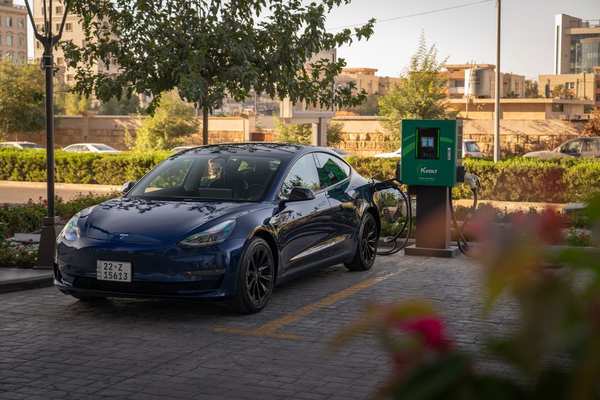
Buying an electric car in the UK in 2026 is no longer a simple choice between “cheap to run” and “expensive to buy”. The real answer depends on where you charge, how far you drive, the price of the car and how long you plan to keep it. EV adoption and charging provision are growing, but the financial advantages are much stronger for some households than others.
For most buyers, the better question is not “Is an EV good?” but “Does an EV fit the way I actually use a car?” A practical EV buying guide UK drivers can follow starts with charging access, then looks at running costs, tax, range and purchase price.
Your charging routine matters more than headline range
If you can charge at home overnight, an electric car remains at its most convincing. Home charging is usually cheaper and easier to plan than relying on public rapid chargers. In Great Britain, Ofgem’s average capped electricity unit rate for a direct-debit customer is 26.11p per kWh from 1 July to 30 September 2026. An efficient EV achieving about 3.5 miles per kWh would therefore use roughly 7 to 8 pence of electricity per mile at that rate, before any cheaper off-peak EV tariff is considered.
Public charging changes the calculation. Zapmap’s June 2026 price index put the weighted average pay-as-you-go price at 54p per kWh for chargers below 50kW and 79p per kWh for rapid and ultra-rapid charging. Drivers who depend heavily on fast public charging can therefore face electric car running costs much closer to petrol-car costs than someone charging on a driveway overnight.
Test your likely week before you buy
Imagine you drive 180 miles a week and can plug in at home three nights a week. An EV with a genuine 220-mile real-world range may be effortless. Now imagine the same mileage from a flat with no dependable residential charger, where most energy must come from rapid chargers. The car is identical, but the ownership experience is very different.
Before ordering, map your normal journeys and identify where you would charge on an ordinary weekday, not just during a holiday trip. That exercise is often more useful than comparing two cars with a 20-mile difference in official range.
The charging network is bigger, but location still matters
Department for Transport statistics recorded 119,080 public EV chargers in the UK on 1 April 2026, including 27,372 rated at 50kW or above, and the department’s monthly series continued to be updated through July. The national total, however, does not guarantee that the right charger is near your home, workplace or regular route.
Home charger grants can reduce setup costs
A proper home charging setup gives many owners their biggest convenience advantage. In 2026, eligible renters and flat owners with private off-street parking can receive 75% towards buying and installing a chargepoint socket, up to £500. Current home and workplace chargepoint grant schemes have been extended to 31 March 2027, although eligibility differs by property type.
EV road tax is no longer zero
One outdated assumption is that electric cars pay no Vehicle Excise Duty. The rates from 1 April 2026 to 31 March 2027 mean a new electric or zero-emission car registered on or after 1 April 2025 pays £10 in its first year and then the £200 standard annual rate.
Higher-priced cars need another check. Electric or zero-emission cars registered on or after 1 April 2025 with a list price above £50,000 can also face the expensive car supplement from the second year for five years. Compare the official list price, not only a dealer discount or monthly finance payment.
Purchase incentives can improve the upfront numbers
The Electric Car Grant helps with the cost of some eligible new models. The discount is applied through the seller, with a maximum of £3,750 for Band 1 cars and £1,500 for Band 2 cars. The eligible list changes, so check the current government list when you are ready to order rather than assuming a model qualifies.
Range anxiety should become journey planning
Official range is useful for comparison, but motorway speeds, cold weather, cabin heating and heavy loads can reduce efficiency. If you regularly drive 170 motorway miles in winter, do not choose a car merely because its official figure sits just above that distance.
Build in a comfortable margin. If long journeys are frequent, prioritise efficient motorway performance and strong rapid charging as well as battery size. Related topics worth exploring on your site include real-world EV range, petrol vs electric car running costs and home charging setup.
So, should you buy an electric car in 2026?
An EV is a strong choice if you can charge cheaply at home or work, your daily mileage sits comfortably inside the car’s real range and you plan to keep it long enough to benefit from lower energy and routine servicing costs. Higher-mileage drivers can benefit especially because every low-cost home-charged mile increases the potential saving.
Think more carefully if you have no reliable low-cost charging option, make frequent long motorway journeys on tight schedules or are stretching your budget to buy a car whose depreciation worries you. In those cases, a hybrid, efficient petrol car or lower-priced used EV may suit you better.
Frequently asked questions
Is it cheaper to run an electric car in the UK in 2026?
Often, yes, when most charging happens at home, especially on a suitable off-peak tariff. The advantage can shrink substantially if you rely on rapid public charging, so compare cost per mile using the prices you would genuinely pay.
Do electric cars pay road tax in 2026?
Yes. EVs are no longer exempt from Vehicle Excise Duty. For 2026 to 2027, qualifying newer EVs pay £10 in the first year and then the £200 standard rate, with an additional supplement potentially applying to higher-priced cars.
Can I get a grant towards an electric car or home charger?
Some new electric cars qualify for the Electric Car Grant, while certain households can receive support towards chargepoint installation. Eligibility is specific, so check the current government rules for both the car and your property before budgeting.
How much EV range should I look for?
Choose range around your regular journeys rather than the largest number available. Leave a sensible buffer for winter and motorway driving, and consider charging speed as well as battery size if you regularly travel long distances.
The decision comes down to your charging life
Buying an electric car in the UK in 2026 can be financially sensible and convenient, but the strongest case still belongs to drivers with dependable low-cost charging. Tax-free motoring is gone and public rapid charging can be expensive, yet purchase grants, expanding public provision and cheaper home charging can still make the numbers work very well.
Start with your driveway, workplace and weekly mileage, then choose the car. When the charging routine fits naturally into your life, an EV becomes much easier to recommend.