
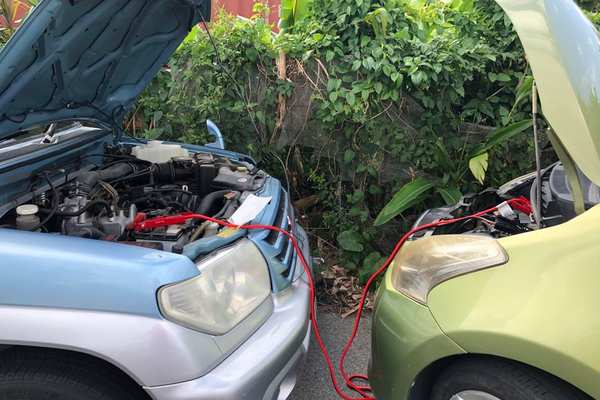
A flat car battery rarely announces itself at a convenient moment. You turn the key, hear a click or a sluggish starter motor, and the engine refuses to run. If the battery is simply discharged, knowing how to jump start a car with jump leads may get you moving without a recovery truck.
The key is to work methodically. You need compatible 12-volt vehicles, sound jump leads and the correct connection order. Check your owner’s handbook first: its designated connection points and safety instructions take priority over general advice.
Make sure a jump start is appropriate
Dim dashboard lights, rapid clicking and unusually slow cranking often suggest a weak battery. If the starter spins normally but the engine will not fire, you may be dealing with a different problem. Jump leads will not fix every no-start fault.
Choose a safe, level place away from traffic. Never try working between cars on a motorway hard shoulder or an exposed roadside; move yourself to safety and call breakdown assistance. Avoid jump starting if either battery is leaking, cracked, swollen, visibly damaged or possibly frozen.
Remove metal jewellery and keep cigarettes, flames and loose clothing clear. Batteries can release flammable gas, while incorrect connections can cause sparks or damage sensitive vehicle electronics.
What equipment do you need?
Use a sound pair of insulated jump leads and a donor car with a healthy, compatible 12-volt battery. Most conventional UK cars use 12-volt systems, but check rather than assume. The vehicles must not touch, even when parked closely enough for the leads to reach comfortably.
Do not use a hybrid or electric car as the donor unless its manufacturer expressly permits this. Stop-start vehicles and cars with batteries in the boot may have dedicated jump-start posts under the bonnet. Consult both vehicle handbooks to locate the correct terminals and earth points.
Apply both handbrakes, select park or neutral, turn off both engines and switch off electrical accessories. Identify the positive (+) and negative (−) markings before touching a clamp. Keep the leads away from cooling fans, belts and any moving parts.
How to connect jump leads: the correct order
Connect the red lead to the flat car
Attach one red clamp firmly to the flat battery’s positive (+) terminal, or the car’s designated positive jump-start point. Make sure it cannot touch surrounding metal.
Connect red to the donor car
Attach the other red clamp to the donor battery’s positive (+) terminal. Keep the remaining clamps separated so they cannot accidentally touch each other.
Connect black to the donor negative
Attach one black clamp to the donor battery’s negative (−) terminal, or to the donor’s specified negative connection point if the handbook directs you there.
Connect the final black clamp to earth
Attach the remaining black clamp to the disabled car’s manufacturer-approved earthing point, typically solid, unpainted metal on its engine or chassis. It should be away from the flat battery, fuel system and moving parts. Do not use the flat battery’s negative terminal unless the handbook specifically instructs you to.
Check all four connections before starting. If you cannot confidently identify an approved connection point, stop and seek assistance rather than guessing.
Starting the engine with the leads attached
Follow your manufacturer’s timing instructions. Common roadside guidance is to start the donor engine and allow it to run briefly before attempting to start the disabled car. Keep hands and leads clear of moving engine components throughout.
Try starting the flat car for only a few seconds at a time. If it does not start, pause before another attempt. Long, repeated cranking can overheat the starter, and several unsuccessful attempts may point to a fault other than simple battery discharge.
For example, imagine you left an interior light on while parked overnight at a railway station. If the battery was healthy beforehand, a carefully performed flat battery jump start may be enough. If the engine still barely turns after several minutes of donor assistance, however, do not keep trying indefinitely.
Once the disabled engine starts, follow handbook instructions about how long the vehicles should run before disconnection. Stop and seek help if you notice smoke, unusual smells, hot cables or electrical warnings.
Remove the jump leads in reverse order
Follow your vehicle handbook. The standard AA procedure is to switch off both engines before removing the leads, then disconnect in the exact reverse order: black from the previously flat car’s earth point; black from the donor negative; red from the donor positive; and red from the previously flat car’s positive connection.
Keep each free clamp away from metalwork and other clamps. Once all leads are removed, try restarting the previously flat car normally. If it will not restart, the battery may need further charging or testing before a journey is sensible.
What should you do afterwards?
A successful jump start does not mean the battery is fully charged. A normal drive of roughly 30 minutes may restore some charge, but the result depends on battery condition, electrical demand and driving conditions. A short stop-start journey is particularly unreliable.
For a more dependable recharge, use a suitable smart charger according to the battery maker’s instructions. If the car needs another jump soon afterwards, have the battery and charging system checked. A worn battery, alternator problem or electrical drain could be responsible.
It also helps to understand flat battery symptoms, signs of a failing alternator and how long a car battery typically lasts. Those related checks can prevent a single emergency from becoming a repeated inconvenience.
When to call breakdown assistance
Do not attempt to jump start with damaged batteries or cables, incompatible vehicles or uncertain connections. Seek help if the car repeatedly refuses to crank, starts then stalls, or displays persistent charging-system warnings. A professional can test whether the battery, starter or alternator is responsible.
Frequently asked questions
Which jump lead do you connect first?
Connect red to the flat vehicle’s positive terminal first, then red to donor positive, black to donor negative and finally black to the flat vehicle’s approved earth point. Check the handbook for model-specific directions.
Can I jump start a car in the rain?
Light rain does not automatically prevent a 12-volt jump start, but poor visibility, slippery ground, damaged cables or unsafe traffic conditions are reasons to stop. Keep clamps securely controlled.
How long should I drive after jump starting?
Driving for about 30 minutes may replace some charge but will not guarantee a full battery. A suitable charger or battery-health check is better if the battery was deeply discharged.
Why will the car not start even with jump leads?
Loose connections, a failed battery, insufficient donor power or faults with the starter or other systems are possible causes. Stop repeated attempts and arrange diagnosis if careful checks do not help.
Keep the next start straightforward
Learning how to jump start a car is mainly about preparation and connection order, not speed. Follow your vehicle’s instructions, avoid preventable risks and investigate why the battery went flat. That final check is what makes a successful restart a lasting solution.