
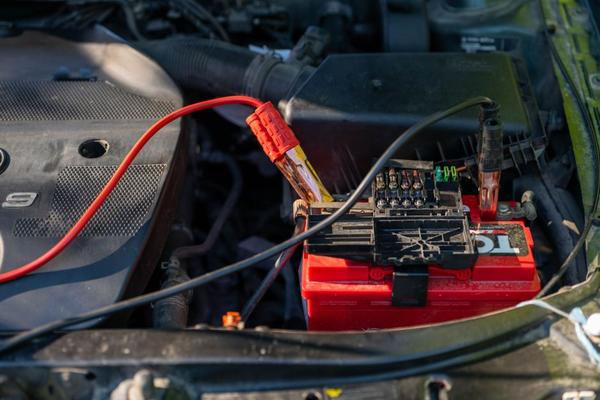
A car that hesitates before starting is easy to dismiss, especially if it eventually fires up. But a sluggish start on Monday can become a flat battery on a frosty Friday morning. Recognising the signs of a failing car battery early gives you time to arrange a test rather than discover the problem when you need to leave.
Not every starting problem means the battery needs replacing. A discharged battery, loose connection, faulty alternator or starter motor can produce similar symptoms. The useful question is not just whether the car starts, but how it behaves before, during and after starting.
Slow engine cranking is often the earliest clue
Listen when you turn the key or press the start button. Normally, the starter turns the engine briskly before it fires. Slow engine cranking sounds laboured, as though each revolution takes extra effort. It may be particularly noticeable on cold mornings, when the battery has less starting capacity and the engine needs more effort to turn.
One slow start is not proof of failure. Repeated hesitation, especially after normal use, deserves attention. Notice whether the delay is becoming more frequent or longer.
Clicking, rapid clicking or no response
Rapid clicks with little engine movement can mean there is insufficient power to operate the starter. A single click may instead indicate a starter or connection fault. If the engine cranks normally but will not fire, other issues such as fuel or ignition faults are more likely. Repeated starting attempts can drain the battery further.
Dim lights and unpredictable electronics
Weak car battery symptoms often appear in equipment dependent on stable voltage. Before starting, headlights or interior lights may seem unusually dim. The dashboard might flicker or reset as the starter draws current. Electric windows may respond slowly, or an infotainment screen may restart unexpectedly.
These are clues, not proof. Some lighting changes during starting are normal. Lights that dim or pulse while driving may signal an alternator, belt or electrical connection problem rather than a worn-out battery.
Stop-start stops working
On cars fitted with automatic stop-start, the engine may no longer switch off at traffic lights when battery charge is low. But temperature, heating demand and other conditions can also disable the feature. Take it more seriously if slow starts happen at the same time.
Physical signs under the bonnet
With the engine off, and only if the battery is safely accessible, look for white or blue-green corrosion around terminals, loose-looking connections, cracks, swelling or leaking fluid. Corrosion and poor connections can restrict current even if the battery itself is serviceable.
Swelling, cracks, leaks or an unusual sulphur-like smell are more urgent bad battery signs. Do not touch leaked material, charge a visibly damaged battery or attempt to jump-start it. Keep clear and contact a qualified mechanic. Some modern batteries are hidden under trim; there is no need to dismantle unfamiliar covers.
Is the battery failing, or simply flat?
A battery can lose charge because the car has been parked for weeks, used only for short journeys or left with accessories running. Appropriate charging and testing may restore reliable starting.
A failing battery has lost some ability to store energy or deliver the high current needed to crank the engine. It may work after charging or a jump-start, then struggle again the next morning. However, a faulty alternator or an electrical drain while parked can cause the same pattern.
Imagine a car making four five-minute school-run journeys on weekdays and sitting unused over the weekend. By Monday, it cranks slowly. Insufficient recharging is plausible; a defective battery is not the only explanation. Battery and charging-system tests help separate the possibilities. Our guide to why a car battery keeps going flat covers other possible drains.
How to check the battery before a breakdown
Start by comparing current behaviour with a month ago. Does the engine turn more slowly? Do displays reset during starting? Does the issue recur after longer journeys or proper charging? Note when it happens so you can give a garage useful details.
For a conventional 12-volt lead-acid starter battery, a multimeter reading around 12.6 volts with the engine off, after resting, generally indicates a full charge. Around 12.2 volts indicates a substantially lower charge. These are approximate state-of-charge guides, not conclusive battery health tests; temperature, battery type and recent use affect readings.
A battery can show acceptable resting voltage yet fail when the starter demands high current. A professional conductance or load test is more informative, alongside checks of charging and connections. See how to test a car battery with a multimeter for an introduction to basic measurements.
When to book a test or replacement
Arrange testing if slow cranking repeats, the car regularly needs a jump-start, or electrical glitches accompany starting problems. Many batteries last several years, but age alone cannot confirm condition. Short trips, extreme temperatures and charging faults all influence lifespan.
If the red battery or charging warning light remains on after starting, or appears while driving, suspect a charging-system problem. Stop somewhere safe and seek assistance rather than assuming a replacement battery will fix it.
When replacement is necessary, match the manufacturer’s specification. Stop-start cars may require EFB or AGM batteries, and some vehicles need battery registration or coding after fitting. Choosing the correct replacement car battery matters more than buying on dimensions alone.
Habits that reduce battery trouble
Switch off accessories when parked, avoid leaving the car unused for long periods, and consider a compatible smart maintenance charger for a vehicle in storage. Repeated short trips may not replenish energy consumed by starting, particularly in winter. Testing is more reliable than hoping one long drive will solve recurring symptoms.
Frequently asked questions
Can a car battery fail without warning?
Yes. Some batteries fail suddenly from an internal fault, while others show gradual warning signs such as slower cranking. Regular checks reduce surprises but cannot predict every failure.
Will a weak battery make the car stall while driving?
A weak starter battery more commonly affects starting. Stalling or electrical power loss while driving may indicate a charging-system fault. Stop safely and seek help if the vehicle becomes unreliable.
Does needing a jump-start mean I need a new battery?
Not necessarily. A battery flattened by lights left on may recover after suitable charging. If it will not retain charge or fails testing, replacement may be necessary.
Can cold weather make a healthy battery seem faulty?
Cold reduces available starting power and makes engines harder to turn, so marginal batteries often reveal themselves in winter. Persistent changes in starting performance still warrant testing.
Act on the pattern, not one symptom
The most useful signs of a failing car battery are repeated changes: progressively slower starts, unreliable electronics before cranking and a battery that will not retain charge. Check the circumstances, rule out simple discharge and have both the battery and charging system tested before a no-start morning takes you by surprise.