
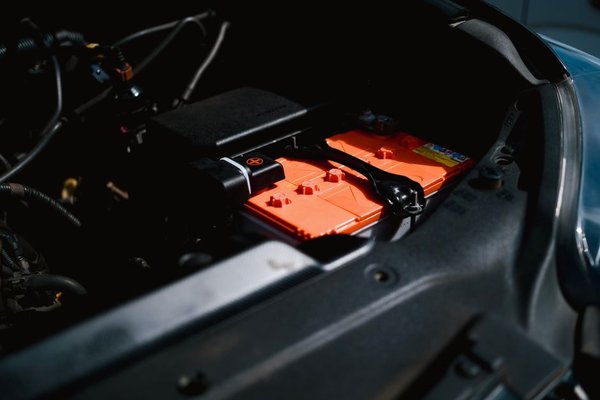
A flat battery can turn an ordinary morning into an expensive inconvenience. Before paying for a replacement, it helps to separate the battery’s price from the cost of fitting it. The car battery replacement cost in the UK varies considerably: an older hatchback with a conventional battery may be relatively inexpensive, while a modern stop-start car can need a costlier battery and electronic setup.
The useful question is not simply “What is the cheapest battery?” It is “What will the correct battery, properly fitted to my car, cost altogether?”
How much does car battery replacement cost in the UK?
As a broad guide, RAC lists standard lead-acid batteries at around £50–£150 and premium AGM batteries at approximately £100–£250, before any separately charged fitting. Its mobile replacement service reports typical totals of roughly £140–£350, depending on the vehicle. These are guides, not universal garage prices: an accurate quote needs your registration and battery specification.
A new car battery cost UK search might show a tempting £70 battery, but that figure may exclude installation. The complete bill can also reflect testing, difficult access and, on certain cars, registration with the battery management system.
Why battery type changes the price
Conventional lead-acid batteries
Many older petrol and diesel cars without stop-start technology use a conventional 12-volt lead-acid battery. These are commonly the least expensive replacements. You still need the correct physical size, terminal position, capacity and starting performance; a battery that fits is not automatically suitable.
Enhanced flooded batteries (EFB)
EFB batteries are built to handle the repeated engine starts associated with many stop-start systems. They generally cost more than conventional batteries. If your car specifies EFB, do not choose a basic battery purely to reduce the replacement battery price. Confirm any alternative against the manufacturer’s requirements.
Absorbent glass mat (AGM) batteries
AGM batteries suit more demanding electrical and stop-start systems. Their greater cycling capability increases their price. An AGM-equipped car will normally need a compatible AGM replacement, not a cheaper conventional unit.
The key is the manufacturer’s specification, not merely whether the car has a stop-start button. Check the handbook and existing battery label, then confirm compatibility before buying.
What does battery fitting cost?
Battery fitting cost depends on the retailer and vehicle. Halfords advertises fitting from around £30–£35 for standard batteries, while its published guidance indicates higher charges, commonly around £40–£50, for start-stop applications. Prices can change, so check a current vehicle-specific quote.
Independent garages sometimes include labour in the battery price; other suppliers list it separately. Mobile fitting is convenient if the car will not start, but compare the total charge with a garage’s fitted quote. A cheap-looking battery is not necessarily the cheapest complete replacement.
When fitting involves extra work
Some batteries sit under a seat or behind boot trim, increasing labour. Certain cars also need a new battery registered or coded so the charging system recognises it. Ask whether any required programming is included. It is not necessary on every vehicle and should not automatically appear on every invoice.
Other factors behind the final bill
Battery capacity, cold-cranking performance, brand and warranty affect the price. Larger engines and vehicles with substantial electrical demands may need more expensive specifications. Stock availability and local labour rates can add variation. Compare warranties carefully: a longer term is useful only if the coverage is appropriate.
These figures concern ordinary 12-volt starting or auxiliary batteries. Replacing the high-voltage traction battery that powers an electric car is a different, much more specialised job.
Check whether replacement is necessary
Slow cranking, repeated flat-battery incidents and electrical problems can suggest battery trouble. Yet a flat battery does not prove the battery has failed. Short journeys, lights left on, poor connections or a charging-system fault can cause similar symptoms.
Request a battery health or load test and, when appropriate, a charging-system check. If the battery warning lamp stays on while driving, an alternator or charging fault may be responsible; simply installing a new battery might not solve it. For more detail, see our guides to car battery warning signs and why a car battery keeps going flat.
Batteries often last about three to five years, although climate, usage and charging patterns matter. Age is a clue, not a substitute for testing.
Example: comparing two UK battery quotes
Imagine a hatchback driver is offered a £110 conventional battery plus £35 fitting: the total is £145. Another garage quotes £155 fully fitted, including a battery test and disposal of the old unit. That £10 difference could be worthwhile if both offers use equivalent batteries and warranties.
A different driver with a stop-start car might be quoted £180 for an AGM battery and £50 fitting, totalling £230. That is not directly comparable with the hatchback’s £145 because the required battery technology differs. These are illustrative calculations, not guaranteed prices.
How to compare quotes fairly
Give suppliers the registration number, model year and stop-start details. Ask them to confirm the battery technology, capacity and warranty. Then request a written total covering VAT, diagnostics, labour, old-battery recycling and any required coding or registration.
Compare a local independent garage, a national retailer and a mobile mechanic where practical. Ask whether the old battery will be tested before replacement and the charging system checked afterwards. Our guide to choosing the right car battery can help you understand the specification before requesting prices.
DIY fitting may save labour on a suitable older vehicle, but electronic systems, awkward battery locations and safety precautions can make professional fitting preferable. Consult the vehicle handbook rather than assuming every battery can be swapped in the same way.
Frequently asked questions
How much is a new car battery with fitting in the UK?
Prices vary by vehicle. Conventional batteries can cost £50–£150 before separate fitting; AGM batteries may cost £100–£250. RAC’s mobile replacement totals commonly fall around £140–£350. Always compare fitted quotes for your exact car.
Is a stop-start battery more expensive to replace?
Usually. Such vehicles often require EFB or AGM batteries and some need battery registration, increasing the potential parts or labour bill.
Can I swap an AGM battery for a standard one?
Do not downgrade without manufacturer-approved compatibility. The replacement must meet the vehicle’s charging and electrical requirements.
Does a flat battery always need replacing?
No. A healthy discharged battery may recover after appropriate charging. Repeated failures or charging problems should be diagnosed before replacement.
Choosing value over the lowest sticker price
Get the battery tested, confirm its specification and compare complete fitted prices. The right battery, installed correctly with any necessary electronic setup, is better value than a cheap unit that is unsuitable or leaves the underlying problem unresolved.